
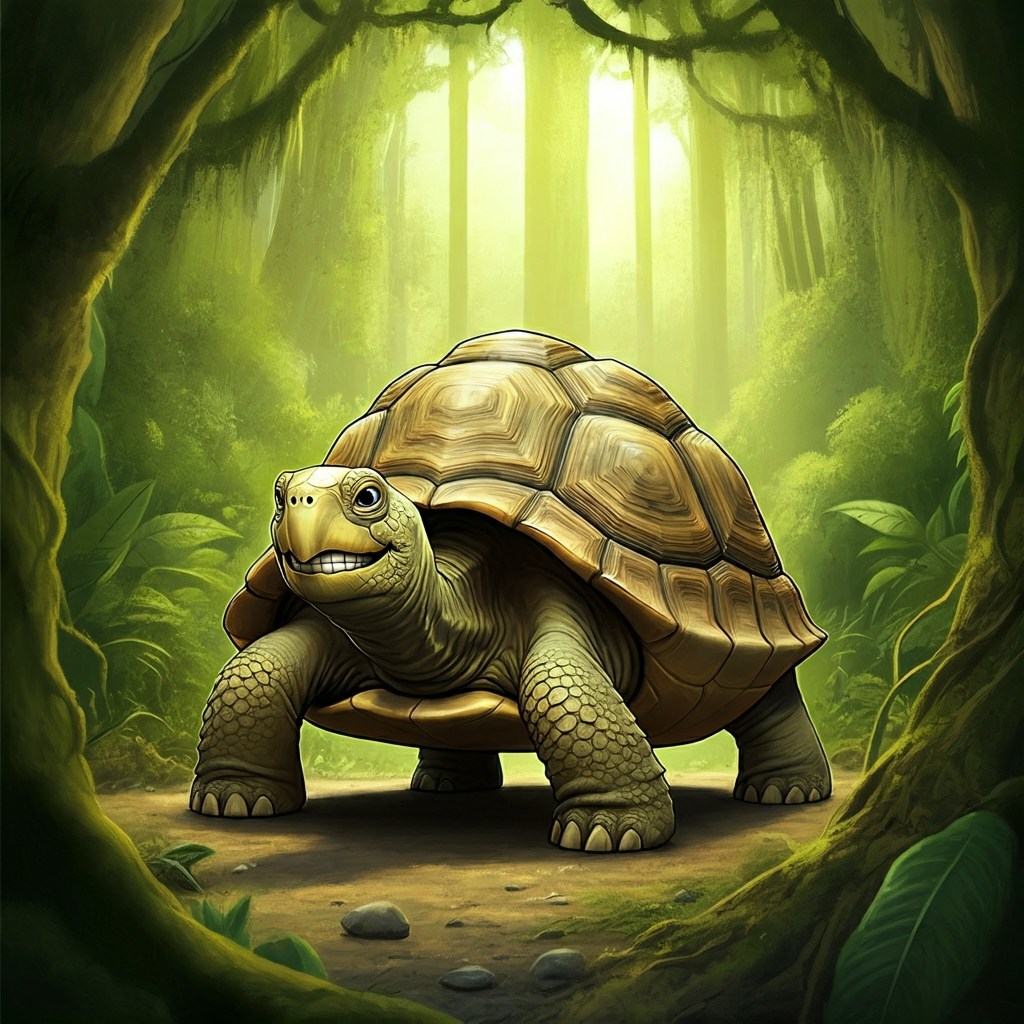
Rarely does a work of such profound simplicity grace my desk, a literary gem that transcends the boundaries of genre and plunges fearlessly into the depths of the human condition. “Timmy the Turtle,” by debut author Amelia Bloom, is not merely a children’s book; it is a poignant exploration of existentialism, a minimalist masterpiece that echoes the profound wisdom of Beckett and the understated brilliance of Kafka.
On the surface, the narrative appears deceptively simple: Timmy the Turtle embarks on a journey to find a juicy strawberry. “Timmy was a turtle, green and small,” Bloom writes, with a deceptively simple opening that belies the profound implications to follow. “He loved to play with his ball.” Within this seemingly mundane quest lies a profound meditation on the nature of existence, a poignant exploration of the search for meaning in a world seemingly devoid of purpose.
Bloom’s masterful use of language, with its sparse yet evocative prose, creates a tapestry of imagery that resonates with the reader long after the final page is turned. “The sun was hot, the sky was blue,” she observes, in a passage that speaks volumes about the relentless nature of time and the fleeting nature of existence. Each carefully chosen word, like a brushstroke on a canvas, contributes to the overall tapestry of meaning, leaving the reader to ponder the deeper implications of Timmy’s seemingly simple journey.
The minimalist illustrations, rendered in a stark palette of black and white, further enhance the book’s existential undertones. The stark contrast between light and shadow mirrors the internal struggle of Timmy as he navigates the complexities of his world, a world that is both familiar and alienating. “Timmy saw a bee, buzzing by,” Bloom writes, accompanying an image of a solitary bee against a stark white sky. The image evokes a sense of loneliness, isolation, and the search for connection in a vast and indifferent universe.
Bloom’s portrayal of Timmy is nothing short of masterful. He is not merely a turtle; he is an everyman, a symbol of the human condition, grappling with the existential angst of a world that often seems devoid of meaning. “Timmy felt a little blue, he didn’t know what to do,” Bloom states, in a passage that speaks to the universal experience of uncertainty and the search for direction in a world that often feels chaotic and confusing. His journey to find the strawberry becomes a metaphor for the human search for purpose, a quest for fulfillment in a world that often feels empty and unfulfilling.
The book’s ending, with its ambiguous resolution, leaves the reader with a lingering sense of unease, a feeling that mirrors the uncertainties of life itself. “Timmy looked high and low, but where did the strawberry go?” Bloom writes, as the final page depicts Timmy gazing at an empty field. Does Timmy find the strawberry? Is the strawberry merely a symbol for a deeper, more elusive desire? Bloom leaves these questions unanswered, forcing the reader to confront the inherent ambiguity of existence, the realization that not all journeys have a clear destination.
“Timmy the Turtle” is not merely a children’s book; it is a work of profound philosophical depth, a literary triumph that will resonate with readers of all ages. Bloom’s masterful use of language, minimalist illustrations, and ambiguous ending create a poignant exploration of the human condition, a timeless tale that will leave you pondering the meaning of life, the pursuit of happiness, and the existential angst of a turtle in search of a strawberry. This is a book that deserves to be read, reread, and cherished for its profound simplicity and its timeless wisdom.




 the Daily Fruitbat
Leave a comment